





Description
The Plant Disease and Insect Diagnostic Laboratory (PDIDL) identifies plant disease and insect problems. For our basic tests (visual examination/microscopy, culture analysis, nematode extraction), there is no charge for Oklahoma residents (commercial or home gardeners) for up to 10 samples per year. Your donation helps keep our service free so people with plant or insect problems can get help. Since the service is free, we are more likely to receive samples of possible invasive pests and diseases that threat to Oklahoma agriculture.

We'd like to take you through a typical problem found in Oklahoma and what the process looks like in our lab. Grape growers sometimes find that their leaves have unusual red blotchiness and the grapes are not evenly ripening (see image below). These symptoms could be due to several different plant viruses. The PDIDL tests for these viruses using either serological (protein based) or molecular (nucleic acid based) testing methods. Once a grower knows which virus it is, they can target their management strategies to prevent spread. Often, this is a combination of removing infected plants and monitoring for the specific insect(s) known to transmit the virus.

We run many different types of tests on plants in the PDIDL. One type is called the double antibody sandwich enzyme linked immunosorbent assay (DAS-ELISA). This testing method detects specific proteins that an organism has. In the image below, plant sap is being loaded into two microplates. In this testing format, we can test up to 45 different plant samples for two different viruses. The sap from one sample is placed into two testing wells per microplate. This testing process takes about 2 days with several incubation steps (2 hours, 4 hours or overnight). Once complete, we will be able to report to the submitter if their plant sample is positive or negative for the organism. In the specific tests shown below, we were testing wheat leaves for two different viruses called soil-borne wheat mosaic virus and wheat spindle streak mosaic virus. All wheat varieties released by the Wheat Improvement Team in Oklahoma are resistant to these viruses which is verified by the tests we run.
Another way we test for viruses is using the polymerase chain reaction method. We extract RNA or DNA from plant and insect samples and test for the specific virus using a machine called a thermal cycler. An image of the tubes being loaded into the machine is shown below. It may not look exciting, but in the end, our clients know if a certain organism is detected or not present in their plant or insect sample.

In case you haven't met us, our team is shown in the image below. Left to right are Sara Wallace (plant pathologist), Nicole Baker (entomologist), Katie Oomens (lab technician), and Jen Olson (plant pathologist and lab director). Jen has been part of the PDIDL team since 2008 and Sara joined in 2019. Katie and Nicole are "newbies", joining the team in 2024 and 2025, respectively.

Our primary function is to identify plant and insect problems that are submitted to the lab. We also provide training around the state to beginning and master gardeners through Oklahoma county extension offices, as well as advanced educational programs for green industry and pest professionals (nurseries, garden centers, arborists, pest control operators). This image of Sara (below) was taken at one of these trainings.

We are also present at many Field Days or other educational events throughout Oklahoma to provide information or answer questions. The image below shows our booth at the Pecan Field Day in Fall 2025. (Jen's not in the photo because she's behind the camera!)

Donations to the PDIDL help support both our travel to these events and supplies for demonstrations. We also could use help replacing some of our equipment in the lab. For instance, we use several centrifuges in our lab. The mini model in the picture below is broken. The tab to open the machine broke off, so the only way we can open it is to pry it with scissors.

We use these mini centrifuges around the lab and have 6. Our lab is set-up to prevent cross contamination since we receive so many samples. We cannot just use a mini centrifuge in another area or we may contaminate a "clean" area with plant material or DNA. As funds allow, we are replacing the old model with this new one (image below, happy orange!). It has a better design (less likely for a piece to break off), but they are about $350 each. We are hoping that funds from this campaign will help provide improvements like this for our lab.

Our lab goes through a lot of "consumable" supplies. In the PDIDL, we use a lot of disposable gloves, pipette tips, tubes, Petri dishes, and reagents (chemicals). Here are a few images showing you how these supplies are used.
First, we make a lot of media for growing plant pathogens in culture. We prepare media such as potato dextrose agar and place it into the machine in the image called an autoclave. It is basically a giant pressure cooker and steam sterilizes the media.

Once the media is sterile, we pour it into Petri dishes. The agar reagent we added is similar to Jello. Once it cools, it is a semi-solid media that is suitable for growing fungi and bacteria. 
We spend a lot of time recovering and identifying fungi and bacteria from plant material to determine if they are affecting plant health. In this photo, Jen is looking at bacteria that was isolated from a plant sample and is ready for identification. We will identify the bacteria by amplifying a fragment of the DNA and using DNA sequencing. 
Thank you for taking the time to review our page. If you have plant problems or insects that you need identified, we are here to help! You may want to start at the extension office in your county since they are a great local resource. They will help coordinate submitting your sample to the lab so we can test for various plant problems or provide insect identification services.

$10
Loupe magnifier
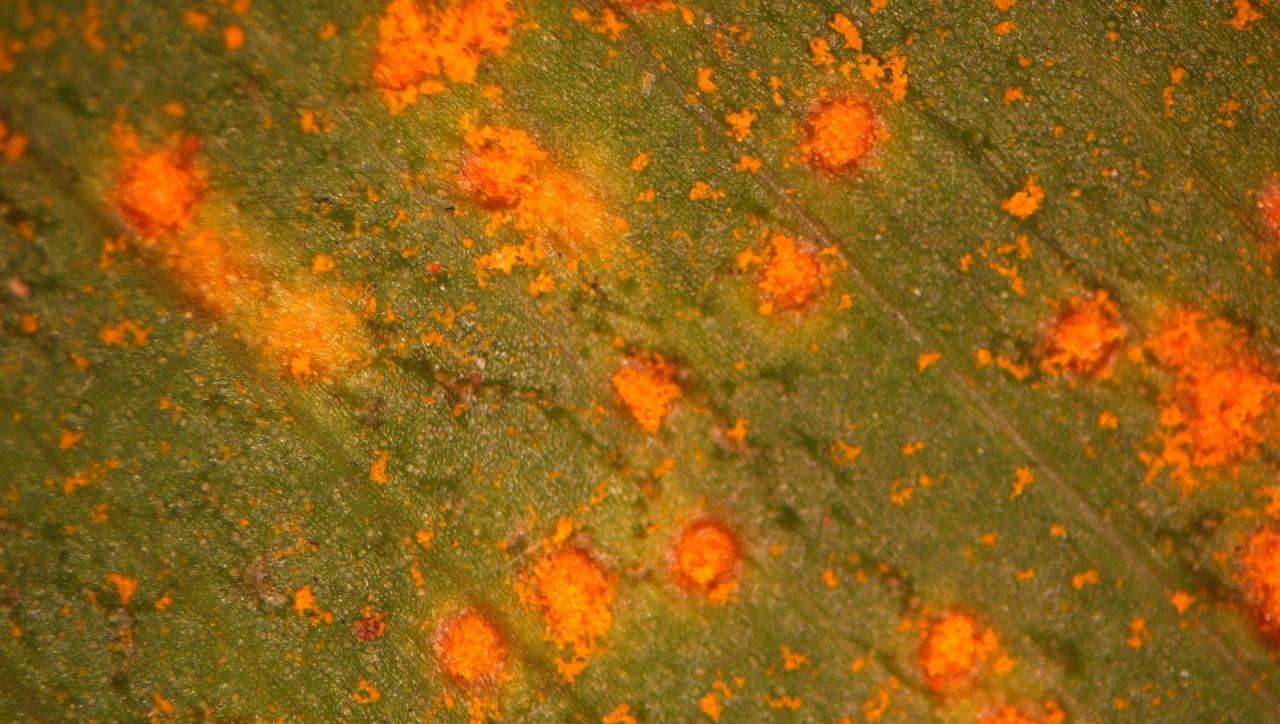
We train county extension educators and master gardeners to use loupe magnifiers (also called a hand lens) to check for pest and disease problems. When you look through these devices, you can see small arthropods (aphids, mites) or fungal structures (rust pustules, fungal fruiting bodies). On Amazon, they are about $10 each, but we buy them in bulk so we get them for about $5 each. Some of our demo magnifiers are broken, so this would allow us to replace them. Also, we give them to extension educators for free when they attend our training events so we can make sure each agent has what they need to identify pests and plant diseases in the field. A $10 donation would cover the cost of two magnifiers.
$25
Digital microscope
We use these in training with county educators and are trying to provide one for each county extension office. They plug into either a cell phone or computer and allow educators to take images of very small things (ant faces, hairs on insects, etc.) They cost about $25 each.
$50
Pipette tips
Each case of pipette tips is about $50. We use pipettes for all types of laboratory tests (nucleic acid extraction, PCR, serology, preparing media) and they are single use only.
$100
PCR 0.2ml tubes
We use these tubes for one type of RNA extraction, for cDNA synthesis and for running PCR reactions. They are single use only, so we go through them quickly. Each case costs just under $100.
$250
Travel to provide training
The staff in our lab provide over 50 presentations a year and many of them are in-person, where we travel the training site. We usually rent a car from motor pool and pay a mileage rate. We go all the way to Guymon or Idabel sometimes so this donation would help get us there.
$1,000
Setting up a new PCR test
We are often asked to test for new pests and plant pathogens using PCR. Each time we do this, the start up cost is at least $1000. This is because we have to purchase a lot of reagents that are unique to the test (such as primers, probes and artificial positive controls). Then, we have to run through a lot of "practice" samples until we optimize and validate the test for use in our lab.
$1,500
Ornamentals workshop-Raleigh
In October 2026, there is a workshop in Raleigh, NC on ornamental pests and diseases. This is where diagnosticians learn about new pests and pathogens that may be headed our way. The cost will be about $1500 per person. We are hoping that we can send at least one diagnostician, but preferably all three.
$2,500
National meeting
Our diagnosticians would like to attend annual meetings of the Entomological Society of America and American Phytopathological Society. At these conferences, we learn about new and invasive pests and diseases, new methods for identifying these organisms and management strategies. Each national meeting costs about $2500 (or more) to attend.